
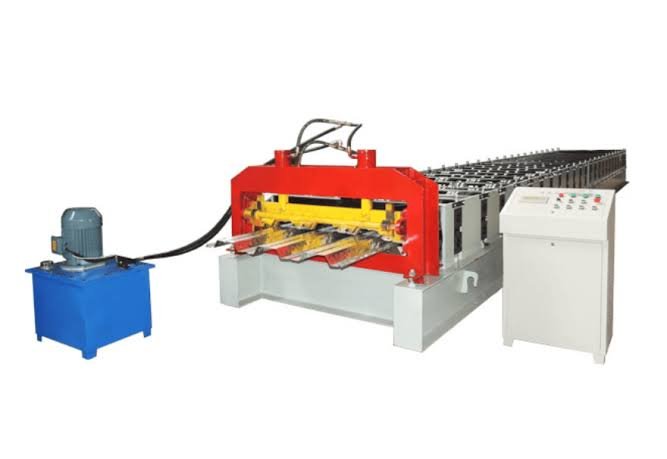
The construction industry continues to evolve as builders and manufacturers look for efficient, durable, and cost-effective building materials. Floor decking plays an important role in modern construction because it provides structural support, improves building strength, and helps speed up installation. As demand for steel floor decking increases, investing in the right manufacturing equipment becomes an important business decision. A floor deck roll forming machine allows manufacturers to produce high-quality metal decking profiles with consistent dimensions and excellent production efficiency.
However, purchasing industrial machinery requires careful planning. Different machines offer different production capacities, technical specifications, automation features, and price ranges. Choosing unsuitable equipment can lead to unnecessary expenses, production delays, and quality problems. Before making an investment, manufacturers should evaluate several important factors to ensure the machine meets their operational requirements and long-term business goals.
1. Understand Your Production Requirements
The first step before purchasing any machinery is identifying your production needs. Every manufacturing business has different requirements depending on its customer base, production volume, and available resources.
Consider how many floor deck sheets you expect to manufacture daily or monthly. A small manufacturing operation may require a standard machine with moderate production capacity, while a large industrial facility may need a high-speed automated system.
You should also consider the types of projects you intend to serve. Commercial buildings, industrial facilities, warehouses, and residential developments may require different decking profiles and specifications.
Understanding these requirements helps narrow down your options and prevents you from purchasing equipment that is either too small or unnecessarily expensive.
2. Check Machine Specifications and Technical Features
Technical specifications determine how efficiently a machine performs during regular production. Before purchasing a floor deck roll forming machine, carefully examine its technical details.
Important specifications include:
- Maximum and minimum material thickness
- Sheet width and feeding capacity
- Number of forming stations
- Production speed
- Motor power and electrical requirements
- Roller material and construction quality
- Cutting system and dimensional accuracy
These specifications should match your intended production requirements. For example, if your business manufactures thicker steel decking, you need equipment designed to handle the required material thickness without excessive mechanical stress.
A machine with appropriate specifications can maintain consistent performance and reduce production interruptions.
3. Evaluate the Quality of Raw Materials and Rollers
The quality of machine components directly affects its durability, accuracy, and operational performance. Rollers are particularly important because they gradually shape flat metal sheets into the required floor decking profile.
High-quality rollers should be manufactured from durable materials and processed to maintain accurate dimensions. Poor-quality rollers may wear out quickly, create inconsistent profiles, or damage the metal surface.
The machine frame should also have sufficient strength to withstand continuous industrial operation. A rigid structure helps minimize vibration and maintain stability during production.
Before purchasing, ask the manufacturer about the materials used for rollers, shafts, bearings, and other critical components. Understanding component quality can help you estimate maintenance requirements and the expected service life of the equipment.
4. Consider Production Speed and Efficiency
Production speed is another important factor when selecting industrial roll forming equipment. A faster machine can increase manufacturing output, but speed should never come at the expense of product quality.
Evaluate the machine’s actual operating speed rather than relying only on advertised maximum speeds. Production efficiency also depends on feeding accuracy, forming consistency, cutting performance, and material handling.
An efficient floor deck roll forming machine should produce consistent decking profiles with minimal material waste. Automatic feeding and cutting systems can further improve workflow by reducing manual operations.
Manufacturers should select equipment that balances speed, accuracy, and reliability. This approach supports better productivity without creating unnecessary pressure on machine components.
5. Examine Automation and Control Systems
Modern manufacturing facilities increasingly depend on automation to improve production accuracy and reduce labor requirements. Advanced roll forming machines often include computerized control systems that manage production settings and operating functions.
A programmable logic controller (PLC) can help operators adjust production lengths, manage cutting operations, and monitor machine performance.
A user-friendly control panel is equally important. Operators should be able to understand machine settings, identify operational issues, and make necessary adjustments without complicated procedures.
Automation can also reduce human errors and improve consistency across large production batches. However, businesses should choose an automation level that matches their budget, workforce capabilities, and production requirements.
6. Review the Floor Decking Profile Options
Floor decking products are available in different designs and dimensions depending on structural requirements and construction applications. Before purchasing machinery, confirm that it can manufacture the profiles required by your target customers.
Some projects require specific rib heights, sheet widths, and metal thicknesses. The machine should be capable of producing the desired profile while maintaining dimensional accuracy.
Ask the supplier whether the equipment supports customized roller designs or interchangeable components. This flexibility can help manufacturers serve different construction projects without investing in completely separate production systems.
Choosing machinery with suitable profile capabilities can expand your product range and create additional business opportunities.
7. Compare Machine Prices and Overall Investment Costs
Price is an important consideration, but selecting equipment based entirely on the lowest quotation can be a costly mistake. A cheaper machine may have lower-quality components, limited automation, or inadequate technical support.
Instead, calculate the total investment required to purchase and operate the equipment.
Consider the following expenses:
- Initial machine purchase price
- Transportation and installation charges
- Electrical setup and infrastructure
- Operator training
- Routine maintenance
- Replacement parts
- Energy consumption
Comparing these costs provides a clearer understanding of the machine’s long-term financial impact.
A reliable machine may require a higher initial investment but can offer better production efficiency, reduced downtime, and lower maintenance expenses over time.
8. Investigate the Manufacturer’s Reputation
Selecting a trustworthy equipment manufacturer is just as important as choosing the right machine. An experienced supplier is more likely to understand industry requirements and provide equipment that meets established manufacturing standards.
Research the manufacturer’s background, production experience, customer feedback, and technical capabilities.
You can also request photographs, videos, or demonstrations of previously manufactured machines. If possible, visit the manufacturer’s facility to inspect production processes and component quality.
Ask about previous installations and whether the supplier has experience producing equipment for businesses with similar requirements.
A reputable manufacturer should provide clear technical information, transparent pricing, and realistic delivery schedules.
9. Check After-Sales Support and Spare Parts Availability
Industrial machinery requires regular maintenance to maintain reliable performance. Even high-quality equipment may occasionally need repairs, adjustments, or replacement components.
For this reason, after-sales support should be a major consideration when purchasing a floor deck roll forming machine.
Find out whether the manufacturer provides installation assistance, operator training, troubleshooting services, and technical guidance. Also, ask how quickly replacement parts can be supplied.
Availability of essential components such as rollers, bearings, cutting blades, motors, and electrical parts can significantly affect production continuity.
A supplier with dependable technical support can help reduce unexpected downtime and make machine ownership more convenient.
10. Consider Installation Space and Factory Requirements
Before ordering machinery, evaluate your factory layout and available installation space. Roll forming equipment may require additional room for raw material storage, sheet feeding, finished product handling, and maintenance activities.
Measure the proposed installation area and compare it with the machine’s overall dimensions.
You should also check floor strength, electrical supply, ventilation, and material transportation arrangements. Proper installation planning helps create a safer and more organized production environment.
Remember that sufficient operating space makes it easier for employees to handle materials and perform routine maintenance.
11. Evaluate Safety Features and Maintenance Requirements
Workplace safety should never be overlooked when purchasing industrial equipment. Roll forming machines contain moving rollers, cutting mechanisms, and powered components that require appropriate safety precautions.
Look for emergency stop buttons, protective guards, electrical safety systems, and clearly accessible operating controls.
You should also understand the machine’s maintenance schedule. Regular lubrication, inspection, cleaning, and component adjustments can help prevent mechanical problems.
A machine designed for convenient maintenance can reduce servicing time and support consistent production.
12. Think About Future Business Expansion
Your current production requirements may change as your business grows. Increasing construction activity, new customer contracts, and additional product requirements may create demand for higher manufacturing capacity.
Therefore, consider whether the equipment can support future expansion.
Look for machinery that offers flexible production settings, upgrade possibilities, and compatibility with additional automation features. Investing in scalable equipment can help avoid replacing your entire production system when business requirements increase.
Future-focused purchasing decisions can provide greater long-term value and help manufacturers remain competitive.
Conclusion
Buying the right floor decking equipment requires more than comparing prices and advertised production speeds. Manufacturers should carefully evaluate technical specifications, component quality, production efficiency, automation, profile capabilities, installation requirements, and after-sales services.
A reliable floor deck roll forming machine can improve product consistency, increase manufacturing capacity, and support the growing requirements of the construction industry. By researching manufacturers, understanding operational needs, and considering long-term investment costs, businesses can make informed purchasing decisions.
Ultimately, the best machine is one that delivers dependable performance, meets customer specifications, and supports future business growth. Taking the time to assess these essential factors before purchasing can help manufacturers build a more productive, efficient, and profitable operation.