
Water damage is one of the most insidious threats a property owner can face. Whether it stems from a burst pipe, a malfunctioning washing machine hose, a sewage backup, or torrential rain, water acts with swift and silent destructive power. Within minutes, it can saturate drywall, warp hardwood floors, and seep into structural foundations. Within twenty-four hours, mold can begin to colonize these damp environments.
For property owners, the immediate reaction to a water disaster often dictates the final financial outcome. Waiting to address the issue or attempting a makeshift cleanup with household fans can result in catastrophic long-term expenses. This is why professional emergency water restoration is not merely a convenience, but an absolute necessity for safeguarding property value and structural integrity.
The Silent and Swift Progression of Water Damage
To understand why rapid intervention is critical, one must examine how water behaves within a building structure. Water is highly cohesive and adhesive; it travels quickly through capillary action, defying gravity to move upward through porous materials like drywall, insulation, and framing timber.
In the first few minutes after a leak or flood, water spreads across floors and pools in low spots, quickly soaking carpets, rugs, and baseboards. Furniture legs sitting in water will absorb moisture, leading to staining and warping.
By the twenty-four to forty-eight-hour mark, the situation escalates dramatically. Wooden structural components begin to swell, distort, and crack. Metal fixtures start to tarnish and corrode. Paint begins to blister and peel away from walls, and adhesives lose their grip, causing tiles and vinyl flooring to detach. Most alarmingly, this is the prime window for mold spores to germinate and multiply rapidly in hidden cavities, ductwork, and behind walls.
Leaving water standing or failing to dry out structural cavities completely sets the stage for progressive decay. Wood rot compromises the load-bearing capacity of studs and floor joists, turning what started as a manageable plumbing leak into a major structural hazard.
The Hidden Dangers: Mold and Structural Degradation
When people think of water damage, they usually visualize wet carpets or ruined furniture. However, the secondary effects of untreated moisture are often far more dangerous and expensive to remediate.
Mold is an opportunistic organism that thrives in damp, dark, and poorly ventilated spaces. Once mold spores find a moisture-rich environment combined with organic food sources like wood, paper, or drywall, they colonize aggressively. Mold can spread throughout an entire HVAC system within days, dispersing microscopic spores into the air that occupants breathe. This leads to serious indoor air quality issues, triggering allergic reactions, asthma attacks, respiratory infections, and chronic fatigue. Remediation of widespread mold requires containment, specialized air scrubbers, and demolition, driving up repair costs exponentially.
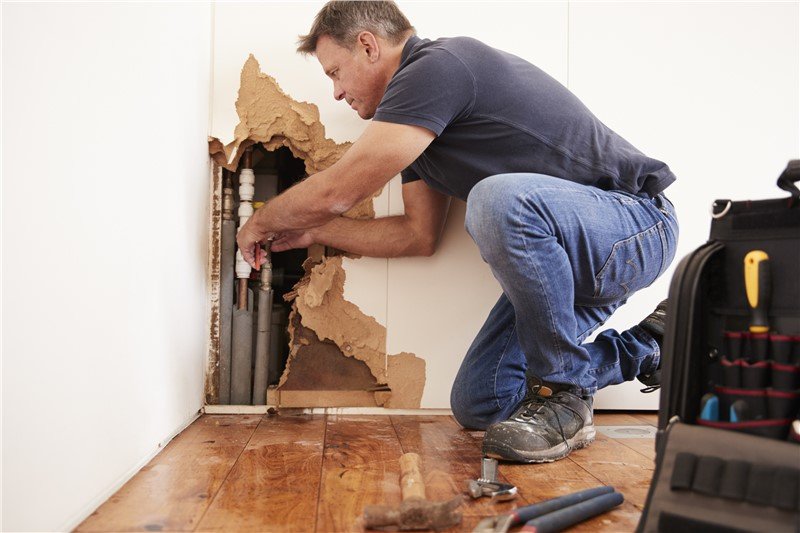
Beyond biological growth, water compromises the very skeleton of a building. Drywall loses its structural integrity entirely when saturated, turning into a crumbly paste that must be completely replaced. Subflooring made of plywood or oriented strand board delaminates and loses its stiffness, creating spongy, unsafe walking surfaces. If moisture reaches the framing or foundation elements, it can weaken the structural envelope, requiring expensive engineering assessments and heavy construction to stabilize the building.
Why DIY Cleanup Falls Short
When faced with standing water, many property owners attempt a do-it-yourself approach using mops, towels, standard household fans, and rental wet-dry vacuums. While these tools have their place for minor spills, they are completely inadequate for a serious water intrusion event.
Water does not merely sit on the surface; it migrates deep into building cavities, subfloors, and wall insulation. Standard household fans only move air across the surface of the room, failing to pull moisture out of dense materials. Without industrial-grade low-grain dehumidifiers, heavy-duty air movers, and moisture meters to track relative humidity and dew points, the building materials will appear dry on the surface while remaining saturated underneath.
This trapped moisture creates a slow-cooker environment for mold and rot. Professional technicians understand psychrometrics—the study of air, moisture, and temperature interaction—allowing them to create an optimal drying environment that extracts moisture from every layer of the affected structure.
The Comprehensive Process of Emergency Water Restoration
Professional emergency water restoration follows a meticulous, science-backed protocol designed to mitigate damage and restore the property to its pre-loss condition as quickly as possible.
Emergency Contact and Rapid Assessment
Time is the single most critical factor in water mitigation. Reputable restoration companies offer twenty-four-hour emergency dispatch. Upon arrival, certified technicians conduct a thorough inspection using advanced thermal imaging cameras and electronic moisture meters to map the exact migration path of the water, identifying hidden pockets of moisture behind walls and beneath flooring.
Water Extraction and Removal
Using high-powered truck-mounted extraction units and submersible pumps, technicians rapidly remove standing water from the property. Quick extraction drastically reduces the drying time required for carpets, padding, and subfloors, minimizing the risk of permanent warping or delamination.
Targeted Drying and Dehumidification
Once bulk water is removed, the structural drying phase begins. Technicians strategically place industrial air movers to create high-velocity airflow across wet surfaces, paired with heavy-duty commercial dehumidifiers to pull moisture out of the air. Continuous monitoring ensures that relative humidity levels drop efficiently day by day until all materials reach their dry standard.
Cleaning, Sanitizing, and Deodorization
Water damage—especially from sewage backups, broken supply lines, or floodwaters—often introduces bacteria, pathogens, and foul odors into the living space. Restoration professionals use EPA-registered antimicrobial and antifungal agents to thoroughly clean and sanitize all affected surfaces, preventing microbial growth and neutralizing unpleasant smells at the molecular level.
Complete Restoration and Repair
The final phase involves returning the property to its original, pristine condition. This can range from minor cosmetic repairs, such as repainting walls and replacing baseboards, to major reconstruction projects involving new drywall installation, flooring replacement, and structural rebuilding. Working with a full-service restoration provider ensures a seamless transition from mitigation to final reconstruction.
Financial Implications: Saving Money Through Speed
A common misconception among property owners is that hiring a professional emergency water restoration company is an unnecessary expense that can be avoided through sweat equity. In reality, delaying professional intervention guarantees higher costs down the line.
Consider the compounding financial impact of delayed action:
- Initial Leak: A minor pipe leak costs a few hundred dollars to repair by a plumber.
- Delayed Response (48 Hours): Water spreads into subflooring and drywall. Carpets must be discarded, and walls require partial demolition. Costs jump into the thousands.
- Neglected Damage (1 Week): Extensive mold growth develops, HVAC ducts are contaminated, and structural framing begins to rot. Remediation, mold abatement, and structural reconstruction can easily soar into tens of thousands of dollars, often exceeding insurance policy limits or triggering massive out-of-pocket expenses.
Furthermore, most property insurance policies contain clauses requiring homeowners to mitigate further damage promptly. Failing to take reasonable steps to dry out a property can result in an insurance claim denial, leaving the owner fully responsible for the repair bill. Hiring certified professionals immediately creates an official paper trail of mitigation efforts, supporting a smooth and successful insurance claims process.
Peace of Mind Through Professional Expertise
Dealing with property damage is emotionally taxing and stressful. Watching water invade personal belongings, family heirlooms, and living spaces can feel overwhelming. Entrusting the crisis to trained specialists provides invaluable peace of mind.
Certified restoration technicians bring years of experience, specialized equipment, and industry-standard protocols to the job site. They handle the heavy lifting, navigate complex insurance paperwork, and execute a systematic cleanup plan that ensures the property is safe, clean, and structurally sound.